

Hydrotherapy pools face higher water quality risks than traditional commercial pools because warmer temperatures, longer user exposure, and vulnerable populations increase contamination and sanitizer demand.
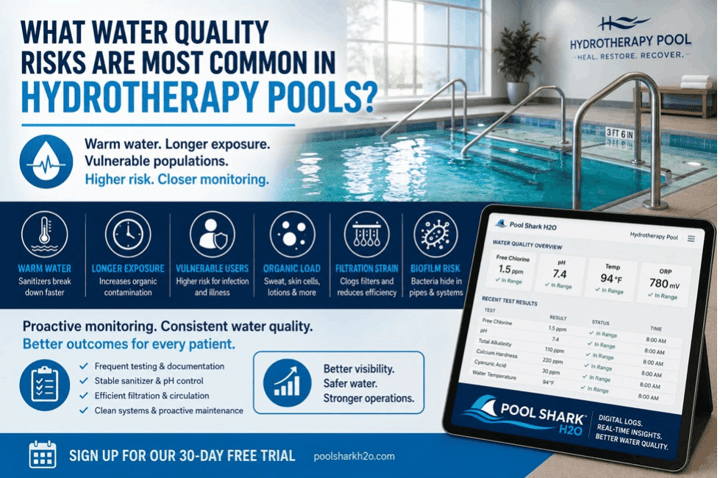
Hydrotherapy pools are designed for rehabilitation and therapeutic use, but those same conditions create a unique operational environment where water quality can shift quickly and require closer monitoring than standard recreational facilities.
Why Do Hydrotherapy Pools Create Higher Water Quality Risk?
Hydrotherapy pools operate under fundamentally different conditions than traditional swimming pools, and those differences directly affect water quality stability.
Most hydrotherapy pools are maintained at elevated temperatures to support muscle relaxation, joint mobility, and therapeutic exercise. While this improves patient comfort and outcomes, warmer water also accelerates chemical reactions in the water and reduces the effectiveness of sanitizers over time. This means chlorine or other disinfectants (often hypochlorite) are consumed more quickly, requiring tighter control and more frequent adjustments.
In addition, hydrotherapy pools often serve users who remain in the water for longer periods than typical swimmers. Extended exposure increases organic load from sweat, skin cells, and other contaminants introduced into the water. Combined with warm temperatures, this creates conditions where water quality can deteriorate faster if not actively managed.
Because of these factors, hydrotherapy pool operators must treat water quality as a continuously evolving control process rather than a routine daily check.
What Are the Most Common Sanitizer Imbalances in Hydrotherapy Pools?
One of the most frequent water quality challenges in hydrotherapy pools is sanitizer instability. Chlorine or other disinfectants can become depleted faster than expected due to higher water temperatures and increased bather load.
When sanitizer levels drop too low, the pool becomes more susceptible to bacterial growth and cloudiness. On the other hand, it’s common for staff and operators to overcompensate by adding too much sanitizer, which can lead to user discomfort, strong chemical odors, and potential compliance issues.
The challenge is not just maintaining sanitizer or chlorine levels, but maintaining them within a narrow and consistent operating range that supports both safety and therapeutic comfort.
This balancing act is more demanding in hydrotherapy environments because conditions can change rapidly throughout the day depending on therapy schedules and usage intensity.
How Does Warm Water Affect Hydrotherapy Pool Water Quality?
Similar to hot tubs and spas, warm water is one of the defining features of hydrotherapy pools, but also one of the biggest contributors to water quality risk.
Higher temperatures reduce the natural stability of disinfectants, meaning sanitizer levels degrade faster than they would in a standard commercial pool. Warm water also encourages faster biological activity, which can increase the likelihood of bacterial growth if residual disinfectant levels are not consistently maintained.
Additionally, warm water can increase the rate of chemical off-gassing, which may alter pH balance and reduce overall water stability. This often results in more frequent adjustments to maintain proper water chemistry.
When you’re managing hydrotherapy pools, it’s critical for patient safety that you consider these temperature-driven changes when setting testing frequency and maintenance schedules.
Why Is Organic Contamination Higher in Hydrotherapy Pools?
Hydrotherapy pools are designed for therapeutic use, which means the user population and usage patterns are very different from recreational swimming pools and they are often smaller.
Many users are individuals undergoing physical rehabilitation, managing chronic conditions, or participating in assisted therapy programs. These users often have longer contact times with the water and may introduce higher organic loads per session compared to typical swimmers.
Organic contamination from sweat, lotions, skin cells, and natural body oils can accumulate quickly in the system. Patients may also release stool into the water. If not properly managed, this can contribute to increased chlorine demand, reduced water clarity, infectious disease spread, and higher risk of biofilm formation in circulation systems.
Because hydrotherapy pools often prioritize comfort and accessibility, they may also experience more frequent entry and exit cycles, which can further increase contamination potential.
What Role Does Filtration Play in Hydrotherapy Pool Water Quality Risks?
Filtration systems in hydrotherapy pools are under constant pressure due to warm water conditions and increased organic load.
Filters have to work harder to maintain clarity, and in some cases may require more frequent backwashing or maintenance compared to standard pools. If filtration isn’t properly maintained, suspended particles and organic matter can remain in circulation, contributing to cloudy water and increased disinfectant demand.
Another challenge is that some hydrotherapy pools use specialized circulation features such as jets or therapy currents, which can alter flow patterns and impact how effectively contaminants are captured and removed.
It’s crucial to ensure filtration systems are properly sized, maintained, and monitored to support continuous water quality control.
How Do Hydrotherapy Pools Increase the Risk of Biofilm Formation?
Biofilm formation is a significant concern in hydrotherapy pool environments.
Warm water, consistent moisture, and organic material create ideal conditions for biofilm to develop within pipes, filters, and circulation components. Once established, biofilm can be difficult to remove and may contribute to recurring water quality issues.
Biofilm acts as a reservoir for bacteria, allowing contaminants to persist even when surface water appears properly balanced. This makes proactive maintenance and consistent system monitoring essential for long-term water quality stability.
Preventing biofilm requires more than routine chemical balancing. To run a clean hydrotherapy pool and effectively prevent biofilm formation, you need to keep focus on system cleanliness, circulation efficiency, and consistent operational oversight.
How Can Operators Reduce Water Quality Risks in Hydrotherapy Pools?
Managing water quality in hydrotherapy pools requires a proactive approach rather than a reactive one. Because conditions can change quickly, operators benefit from frequent testing, consistent documentation, and well-defined operational procedures.
Maintaining stable sanitizer levels, monitoring pH closely, and ensuring filtration systems are functioning efficiently are all essential components of a strong water management program. Equally important is aligning maintenance practices with usage schedules so that changes in bather load or therapy sessions are accounted for in real time.
Facilities that adopt a disciplined and technology-enabled water monitoring system often experience fewer disruptions, improved water clarity, and more predictable chemical usage over time.
How Can Pool Shark H2O Help Manage Hydrotherapy Pool Water Quality?
Hydrotherapy pools demand a higher level of operational visibility than traditional commercial pools due to their unique water quality risks and usage patterns.
Pool Shark H2O helps facilities standardize therapy pool water testing, reduce manual error, ensure accurate documentation, and maintain real-time visibility into water conditions, supporting safer, more reliable therapy environments.
By helping operators identify issues earlier, reduce variability in water quality, and improve overall system efficiency, Pool Shark enables hydrotherapy pools to remain safe, stable, and consistently ready for therapeutic use.
Sign up for our 30-Day Free Trial and see for yourself.