
Cloudy water, algae outbreaks, and heavy debris loads can quickly overwhelm a public commercial pool filtration system. In these situations, standard vacuuming may not be enough. When this is the case, vacuuming a pool “to waste” becomes an important maintenance strategy for commercial and public pool operators.
What Does It Mean to Vacuum a Pool “To Waste”?
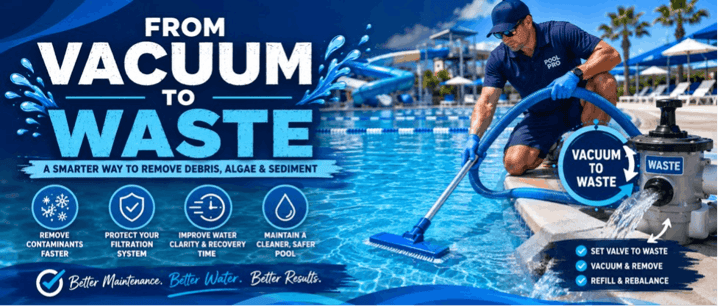
Vacuuming a swimming pool “to waste” means bypassing the filtration system and sending dirty water directly out through the waste line instead of back into the pool. This method is commonly used when a pool contains large amounts of debris, algae, sediment, or contaminants that could clog filters or recirculate back into the water.
For commercial and public pools, vacuuming to waste is especially useful after:
- algae treatment
- heavy storms
- construction debris contamination
- high bather load events, like parties, holidays, or swim meets
- severe water clarity issues
- Lower CYA by flocking and vacuuming to waste
The CDC recommends that aquatic operators follow consistent maintenance and water quality management procedures to help maintain safe swimming conditions and reduce contamination risks.
Because the water exits the pool system entirely, operators should expect the water level to drop during the process and plan to refill the pool afterward.
Why Commercial Pools Vacuum to Waste
In a standard filtration cycle, debris passes through the pump and filter before clean water returns to the pool. That works well for routine maintenance, but it becomes less effective when dealing with very fine particles or excessive contamination.
Vacuuming to waste offers several advantages for commercial, public, and community aquatic facilities:
-
Removes Fine Debris More Efficiently
-
Dead algae, silt, and fine sediment can pass through some filtration systems or rapidly increase filter pressure. Vacuuming to waste removes these contaminants completely.
-
Reduces Filter Strain
-
Sending heavy debris directly to waste helps protect expensive commercial filtration systems from clogging and excessive backwashing. Commercial aquatic systems are commonly designed around NSF/ANSI performance standards intended to support safe and effective circulation and filtration.
-
Improves Water Recovery Time
-
For hotels, municipal pools, schools, HOAs, and aquatic centers, downtime matters. Vacuuming to waste can accelerate water clarity restoration after contamination or algae remediation.
-
Supports Health and Compliance Standards
Public pools must maintain strict water quality standards. Removing contaminants quickly helps operators restore balanced, swimmable water conditions faster.
When Should You Vacuum a Pool to Waste?
Commercial pool operators typically vacuum to waste when the amount or type of debris would overwhelm your filtration system or create longer water recovery times. This is especially common after algae treatment, when dead algae settles across the pool floor in fine particles that can quickly clog filters or recirculate back into the water. Some public pool regulations explicitly recommend discharging heavily contaminated or sediment-filled water directly to waste rather than through the filtration system.
The same approach is often used after severe storms, flooding events, or nearby construction activity that introduces large amounts of dirt and sediment into the pool.
Vacuuming to waste is also useful when your pools experience heavy bather loads or water clarity issues that leave fine debris settled on the bottom. In these situations, sending contaminants directly out through the waste line is often faster and more effective than repeatedly filtering the same particles through the system.
For lighter dirt or routine maintenance, however, standard vacuuming through the filter is usually sufficient.
Step-by-Step: How to Vacuum a Pool to Waste:
1. Raise the Water Level Slightly if Needed
Before you begin, verify the pool water level is high enough to account for water loss during vacuuming. Because water exits through the waste line, the level can drop quickly.
Many operators begin with the water level slightly above normal operating level to avoid exposing skimmers during the process.
2. Assemble the Vacuum Equipment
Connect:
- vacuum head
- telescopic pole
- vacuum hose
Make sure all connections are secure to prevent suction loss, and check that the vacuum head is appropriate for the pool surface type and pool size.
3. Prime the Vacuum Hose
Air entering the system can disrupt suction and reduce pump efficiency.
To prime the hose:
- Submerge the hose fully in the pool
- Allow water to fill the entire hose
- Remove all visible air bubbles
- Connect the hose to the vacuum port or skimmer
This step helps protect the pump from drawing excess air.
4. Set the Multiport Valve to “Waste”
Turn off the pump before adjusting the valve.
Once the pump is off:
- move the multiport valve to the “Waste” setting
- restart the pump
On some commercial systems, the setting may be labeled:
- Waste
- Drain
- Backwash/Waste
Always consult the manufacturer guidelines for your specific filtration system. Many public pool operational standards also emphasize proper circulation system procedures and post-maintenance water balancing to maintain safe swimming conditions.
5. Vacuum Slowly and Methodically
Move the vacuum head slowly across the pool floor.
Fast movements can stir debris into suspension, making removal more difficult and reducing visibility.
Commercial operators should use overlapping passes to ensure complete debris removal, especially in deep ends and corners where sediment accumulates.
Monitor:
- suction performance
- water level
- pump operation
- discharge flow
Because water exits the pool continuously, you’ll need to ensure the water level doesn’t fall below skimmer openings.
6. Stop Vacuuming Before Water Gets Too Low
If the water level approaches the skimmer opening:
- stop the pump immediately
- refill the pool as needed
- resume vacuuming if necessary
Allowing the pump to run dry can damage commercial pool equipment and create unnecessary downtime.
7. Return the System to Filter Mode
Once vacuuming is complete:
- Turn off the pump
- Return the valve to “Filter”
- Restart the system
- Verify normal circulation and pressure
Afterward, test and rebalance pool chemistry as needed.
Vacuuming to waste removes water from the system, and any time you do that, it can impact chlorine levels, pH, alkalinity, and overall water balance.
Common Mistakes to Avoid
One of the most common mistakes operators make when vacuuming to waste is moving too quickly across the pool floor. While understandable (vacuuming can be tedious), fast vacuuming stirs debris into suspension instead of removing it, which can make the water cloudier and actually extend cleanup time. Slow, overlapping passes are typically far more effective, particularly in large commercial pools where sediment tends to settle unevenly.
Another frequent issue is failing to monitor the pool’s water level during the process. Because water is being discharged directly to waste, the level can drop surprisingly fast. If it falls below the skimmer openings, the pump may begin drawing air, potentially damaging equipment and interrupting circulation.
Operators should also avoid changing the multiport valve while the pump is running. This can damage the valve and place unnecessary strain on the filtration system. Once vacuuming is complete, it is equally important to retest and rebalance the pool water. Since vacuuming to waste removes a significant amount of water from the system, sanitizer levels, pH, alkalinity, and overall water balance can all shift after refilling.
The CDC recommends maintaining proper chemical balance and monitoring sanitizer levels closely after maintenance activities that alter pool water volume.
Best Practices for Commercial Pool Operators
For commercial and public pools, vacuuming to waste works best as part of a proactive maintenance strategy rather than a reactive fix for severe water issues. Facilities that maintain consistent testing schedules, monitor filter pressure regularly, and address early signs of algae or debris buildup are typically able to recover water quality faster and with less operational disruption.
Training staff on proper vacuuming procedures is also critical. Consistency in technique helps reduce unnecessary water loss, protects equipment, and improves overall water clarity outcomes. We recommend documenting your maintenance procedures and establishing clear response protocols after storms, contamination events, or periods of high pool usage.
As aquatic facilities continue looking for ways to improve efficiency, many operators are adopting integrated monitoring and water management systems that provide better visibility into chemistry trends and equipment performance. These tools can help reduce manual guesswork, support compliance efforts, and simplify day-to-day pool maintenance operations.
Smarter Commercial Pool Maintenance
Effective commercial pool maintenance requires more than reacting to water issues after they happen. Industry guidance increasingly emphasizes preventative maintenance, consistent monitoring, and operational standardization as key parts of successful aquatic facility management.
The right operational strategy, testing systems, and support partner can help facilities reduce downtime, improve water quality, and simplify daily maintenance tasks. Clean, healthy water is a major part of ensuring a positive guest experience, which can then lead to repeat business, positive reviews, and protect against negative reviews.
At Pool Shark H2O, we help commercial and public pool operators simplify water testing, ensure accurate results and logbooks, and streamline remote management for your facilities.
Whether you’re managing a hotel pool, municipal aquatic center, HOA, school, or large commercial facility, our solutions can help you improve efficiency, maintain compliance, and keep your water crystal clear all season long for a safe and memorable guest experience.