

For commercial and community pool operators, summer arrives all at once. High swimmer volumes, longer operating hours, higher water temperatures, and stricter public health scrutiny all put additional demand on your water chemistry program.
The facilities that start the season smoothly aren’t scrambling in June. They prepare in advance.
Getting your pool chemicals ready for summer isn’t just about placing an order. It means reviewing inventory, checking expiration dates, evaluating what you used last year, assessing pool chemical storage conditions, and securing supply before seasonal demand spikes. A proactive chemical plan protects water quality, budgets, compliance, and even your reputation.
Here’s how to do it right.
1. Start with a Full Chemical Inventory
Before ordering anything, take stock of what you already have.
Conduct a complete review of your chemical storage area and document:
- Chlorine products (liquid, cal-hypo, tabs, etc.)
- Shock or oxidizers
- Cyanuric acid (also called pool stabilizer)
- Muriatic acid or dry acid
- Sodium bicarbonate or alkalinity increaser
- Calcium hardness increaser
- Algaecides
- Metal sequestrants
- Test kit reagents and Spin Touch disks
- Specialty chemicals (clarifiers, enzymes, phosphate removers)
Check container condition, lot numbers, and storage integrity. Look for signs of moisture intrusion, clumping, discoloration, or degraded packaging.
This step prevents unnecessary over-ordering and helps you identify what can still be used going into the summer season and what truly needs replacement.
2. Check Expiration Dates and Potency
Not all pool chemicals last indefinitely. Expired pool chemicals lose efficacy and create safety and operational risks.
Liquid Chlorine
Liquid sodium hypochlorite degrades relatively quickly, especially if stored in warm conditions. Its strength decreases over time, meaning dosing calculations may no longer match actual potency. Using weakened chlorine can lead to under-chlorination and sanitation risks.
Granular Chlorine and Tablets
Dry chlorine products generally last longer when stored properly in sealed containers, but they can degrade if exposed to humidity.
Test Reagents
This is one of the most commonly overlooked items. Liquid test reagents lose accuracy over time. Expired reagents can produce inaccurate readings, which leads to incorrect chemical adjustments.
If your testing isn’t accurate, nothing else will be either.
Make it standard practice to replace test reagents at the start of each season unless you can verify freshness.
3. Review Last Year’s Chemical Usage
Your purchasing decisions should be based on data, not guesswork.
Pull last season’s chemical usage records and ask:
- How much chlorine did we actually use during peak months?
- Did we run out of any products?
- Did we have to place any emergency orders?
- Did weather or attendance affect usage patterns?
- Did we deal with algae outbreaks, metal issues, or scale?
Commercial pools with high swimmer volume often see significantly higher chlorine demand during sustained hot weather or during summer holidays. If your facility experienced heavy usage last summer, expect similar or higher demand this year.
Reviewing usage trends allows you to forecast realistically rather than ordering conservatively and risking shortages.
4. Order Early Before the Seasonal Rush
Every year, suppliers experience seasonal spikes in demand.
As temperatures rise, so does chlorine consumption across residential and commercial markets.
Waiting until late spring to order large quantities increases the risk of:
- Delivery delays
- Limited stock
- Price increases
- Substituted products
Ordering early helps ensure better availability and more stable pricing, plus reduced operational stress.
It also allows time to correct any storage deficiencies before chemicals arrive.
5. Inspect and Improve Storage Conditions
Proper storage extends chemical shelf life and keeps everyone from staff to guests safe.
Chemicals should be stored in:
- Cool, dry, well-ventilated spaces
- Original labeled containers
- Separate areas for incompatible products
- Shelving off the floor to prevent moisture exposure, but not so high it creates drop, splash, and spill risk
Never store acids and chlorine products together. Check to ensure secondary containment and ventilation meet your local codes.
If your chemical room experienced excessive heat last summer, consider ventilation upgrades. Heat accelerates degradation, especially for liquid chlorine and can ruin water testing reagents.
6. Align Chemical Prep with Your Operational Plan
Summer prep is more than inventory management. It should align with:
- Opening procedures
- Preventative maintenance schedules
- Staff training refreshers
- Health department inspections
Whether you operate year-round or seasonally, as soon as you’re able to, ensure your team understands dosing protocols, testing frequency, and documentation requirements. Revisit breakpoint chlorination procedures and contingency plans for algae, AFR or high-demand events.
A well-prepared chemical program reduces reactive decision-making later.
A Strong Season Starts with Preparation
Just like in baseball, your summer success is built in the off-season.
By reviewing inventory, checking expiration dates, analyzing prior usage, improving storage conditions, and ordering early, commercial pool operators position themselves for consistent water quality and regulatory compliance.
The goal isn’t just to have chemicals on hand, it’s to also ensure they’re effective, properly stored, and aligned with expected demand.
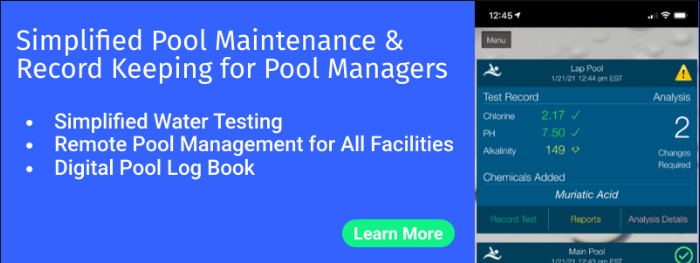
Pool Shark H2O is a critical resource for your preparations. During your active season, staff and operators can use the Pool Shark H2O app to automatically log pool test results and make highly accurate chemical adjustment calculations.
Once logged, results and calculations are digitally archived–making them easy to reference during Health Department audits as well as in the off-season to make forecasting summer chemical orders easy and highly-tuned.
Getting Pool Chemicals Ready for Summer - Frequently Asked Questions
Do pool chemicals really expire?
Yes, they really do, but shelf life varies by product. Liquid chlorine degrades relatively quickly, especially in heat. Dry chlorine products last longer if stored properly. Test reagents and strips also lose accuracy over time. Using expired chemicals can reduce effectiveness and lead to an inconsistent water balance.
How far in advance should commercial facilities order chemicals for summer?
Ideally, large seasonal orders should be placed several weeks before peak season begins. This avoids supply chain disruptions and ensures availability before regional demand spikes. Facilities in high-use areas may benefit from ordering even earlier.
Can I carry over chemicals from last season?
You can if they’ve been stored properly and remain within usable shelf life. Inspect containers carefully and verify potency where possible. Replace any degraded, clumped, discolored, or expired products. Always replace questionable test reagents.
What’s the biggest mistake operators make when preparing for summer?
Waiting too long. Many facilities focus on mechanical prep and overlook chemical readiness. By the time chlorine demand increases, supply shortages or weakened product can create avoidable water quality issues. Proactive planning is far less disruptive than emergency response.
