

Quick Answer: Is Saltwater Pool Maintenance Easier for Commercial Pools?
Saltwater pools still require regular testing, balancing, and preventative maintenance. While salt chlorine generators automate chlorine production, commercial operators must continue monitoring water chemistry, equipment performance, and salt cell condition to maintain safe swimming environments.
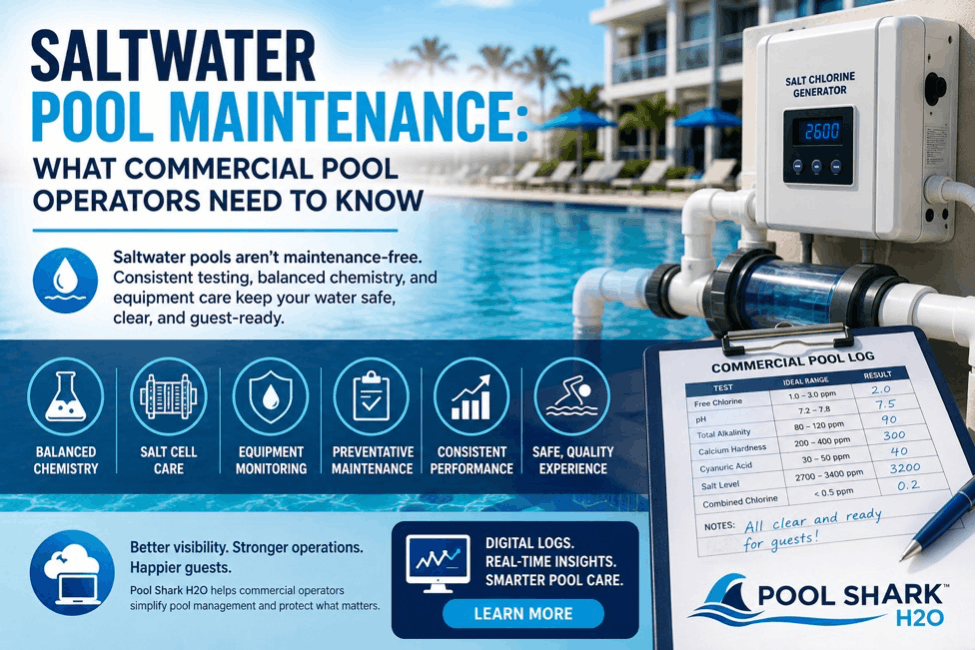
Many hospitality properties, HOAs, fitness facilities, and public aquatic venues choose saltwater systems because they provide more consistent chlorine generation and can improve the swimmer experience. However, "lower maintenance" should never be confused with "maintenance-free."
Understanding what changes—and what stays the same—is essential for effective commercial saltwater pool management.
What Makes Saltwater Pool Maintenance Different?
The biggest misconception about saltwater pools is that they eliminate chlorine.
They don't.
Saltwater pools are still chlorine pools. The difference is how the chlorine is introduced into the water. Rather than manually adding chlorine as the primary sanitization method, a salt chlorine generator converts dissolved salt into chlorine through electrolysis.
This creates a more continuous supply of sanitizer, helping operators avoid the peaks and valleys that can occur with manual dosing.
However, even though the chlorine delivery mechanism is changed, commercial operators still need to maintain appropriate disinfectant levels, pH, alkalinity, calcium hardness, and overall water balance.
What Should Commercial Operators Monitor in Saltwater Pools?
Routine water testing is still critical in saltwater environments.
According to the CDC, public and commercial pools should maintain appropriate disinfectant residuals, monitor pH regularly, and document maintenance activities to help prevent recreational water illnesses.
For saltwater systems, operators should routinely monitor:
- Free chlorine
- pH
- Total alkalinity
- Calcium hardness
- Cyanuric acid (where applicable)
- Salt concentration
- Combined chlorine
Salt levels that fall outside the manufacturer's recommended range can reduce chlorine production efficiency and place unnecessary strain on the generator cell.
If your pool frequently sees fluctuating bather loads, you may need to increase your water monitoring frequency during peak periods.
Why Does pH Require Special Attention in Saltwater Pools?
One of the most common operational characteristics of saltwater systems is their tendency to drive pH upward over time.
As chlorine is generated through electrolysis, the process can contribute to gradual increases in pH. Left unmanaged, elevated pH levels may reduce sanitizer effectiveness and contribute to scaling within equipment and salt cells.
For hospitality operators and commercial facilities that need predictable operations, proactive pH management becomes an important part of maintaining water quality stability.
Rather than waiting for imbalances to occur, many operators benefit from establishing regular testing schedules and clearly defined corrective actions.
How Often Should Salt Cells Be Inspected and Cleaned?
Salt chlorine generators require periodic inspection to ensure they continue producing chlorine efficiently.
Over time, calcium scale can accumulate on the generator cell plates, particularly in facilities with elevated calcium hardness or high saturation indices. Excessive buildup may reduce chlorine output and shorten equipment lifespan.
Inspection frequency depends on water conditions, bather load, and manufacturer recommendations, but preventative maintenance is generally more effective than waiting for performance issues to show themselves.
Cleaning procedures should always follow the equipment manufacturer's guidance to avoid damaging the cell.
Are Saltwater Pools Really Lower Maintenance?
The answer depends on how you define maintenance.
Saltwater systems can reduce the need for frequent manual chlorine additions because sanitizer production occurs continuously. This may improve consistency and reduce certain day-to-day operational tasks.
However, saltwater pools introduce additional maintenance considerations, including:
- Salt level monitoring
- Salt cell inspection and cleaning
- Corrosion prevention strategies
- Generator performance verification
Operators should think of saltwater systems as different maintenance, not necessarily less maintenance.
The chemistry still requires attention even though the equipment changed.
What Operational Challenges Should Hospitality Facilities Consider?
Hotels, resorts, and other hospitality properties face unique pressures when managing saltwater pools.
Guest expectations are high, bather loads fluctuate significantly, and staffing resources may be limited. Negative experiences with high-visibility amenities, like pools, often lead to negative reviews–which impact the business. During peak occupancy periods, chlorine demand can increase rapidly. If you’re operating a saltwater pool, it’s crucial to regularly verify that generation rates remain aligned with facility usage.
Preventative maintenance programs become especially valuable in these environments. Monitoring trends before they become problems helps reduce unexpected downtime and supports a more consistent guest experience. A clean, well-maintained pool can even be a revenue generator for you.
For facilities operating year-round, equipment inspections and documented maintenance schedules can also improve budgeting and long-term asset planning.
How Can Commercial Operators Improve Saltwater Pool Management?
Successful saltwater pool management depends on visibility.
Operators who rely exclusively on reactive maintenance often discover issues after water quality has already been affected. By contrast, facilities that emphasize routine monitoring, trend analysis, and preventative maintenance can address emerging concerns earlier.
Documentation also plays an important role. Maintaining records of chemistry readings, equipment inspections, and maintenance activities supports consistency across teams and can simplify compliance efforts.
As commercial aquatic environments become increasingly complex, many facilities are adopting technologies that help centralize information and reduce reliance on manual processes.
How Can Pool Shark H2O Support Saltwater Pool Operations?
Saltwater systems offer meaningful advantages for many commercial aquatic facilities, but they still require active management to perform effectively.
Pool Shark H2O helps commercial operators gain better visibility by replacing traditional paper commercial pool logs with a simple, easy-to-implement-and-manage cloud-based solution. Whether you're managing a hotel pool, community aquatic center, fitness facility, or multi-property portfolio, having access to timely information can help reduce disruptions and support more consistent water quality outcomes. Pool Shark H2O makes accurate and consistent water testing and adjustments easy for your staff. Instantly locked and archived digital records make compliance and audits a breeze.
Gain confidence that you and your teams are managing your saltwater pools right, so your guests have a safe, quality experience that leaves them happy and coming back.